
Losing a tooth as an adult hits differently than it did as a kid. There’s no tooth fairy waiting on the other side, just a decision about how to replace it, and a lot of conflicting information about which option is actually worth the investment. Bridges, dentures, and implants all solve the same basic problem, but they go about it in very different ways, with very different long-term results.
If you’re standing at that decision point right now, here’s an honest, side-by-side look at how each option actually holds up over time.
The Three Main Options, Explained
Dental bridges A bridge fills the gap using a false tooth anchored to the natural teeth on either side. It requires those neighboring teeth to be reshaped to support the bridge, which means altering healthy tooth structure to fill in for the one that’s missing. Bridges typically last 10 to 15 years before needing replacement.
Dentures Removable dentures replace one or more missing teeth and rest on the gums, sometimes with clasps anchoring to nearby teeth for partial dentures. They’re a more affordable upfront option, but they require nightly removal, ongoing adjustments as your jawbone shape changes over time, and many patients find them less stable when eating certain foods.
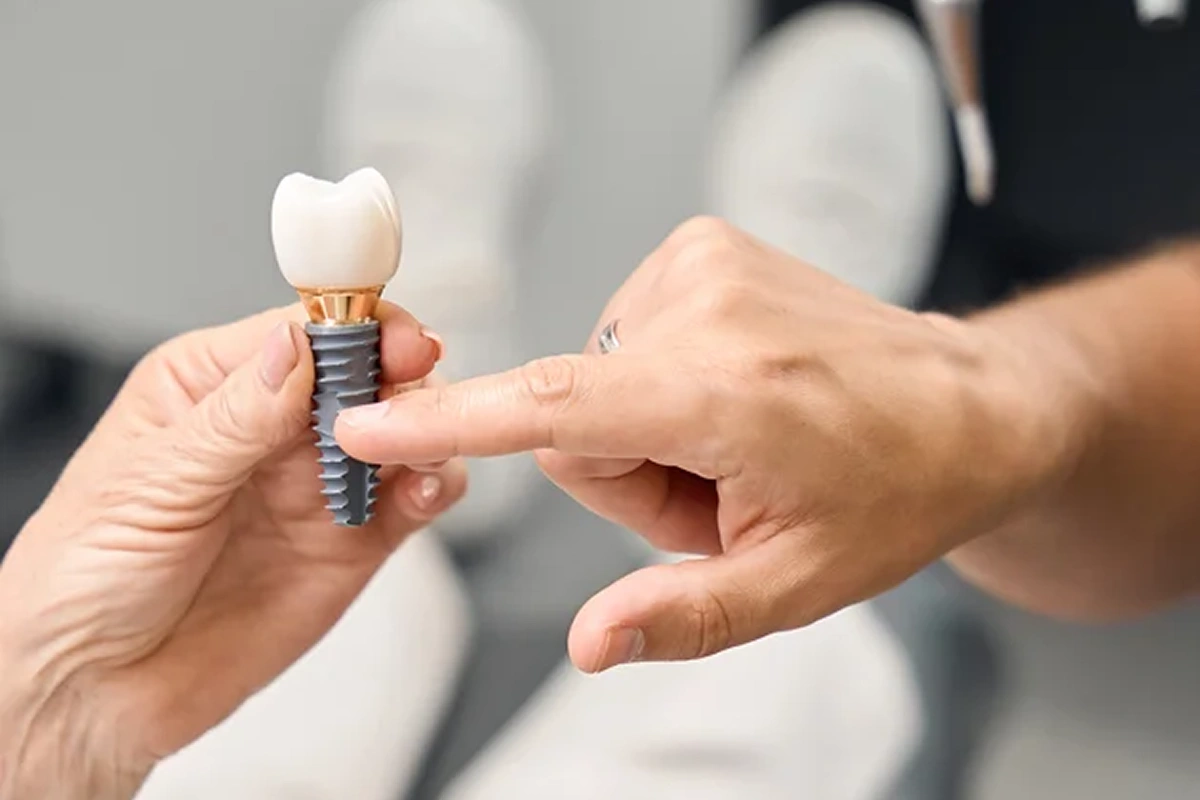
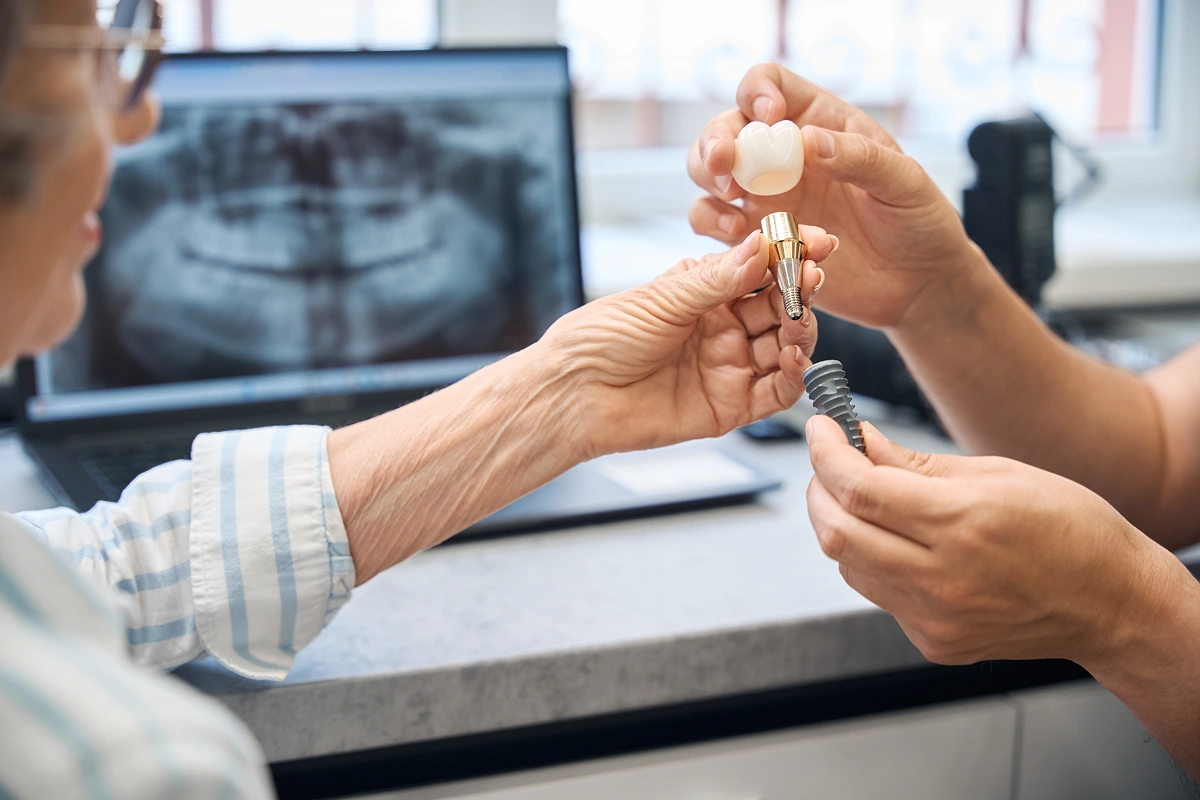
Dental implants An implant replaces the entire tooth structure, root included, using a titanium post placed directly into the jawbone, topped with a custom crown. Because the post fuses with the bone, implants function much more like a natural tooth than either bridges or dentures, and don’t require any alteration to neighboring healthy teeth.
Why More Patients Are Choosing Implants
Long-term durability is really where the comparison shifts in favor of implants. A well-placed and properly maintained implant can last 20-plus years, and in many cases, a lifetime, while bridges and dentures generally need replacement or significant adjustment well before then.
There’s also the bone health factor, which doesn’t get talked about enough. When a tooth is missing, the jawbone underneath it naturally begins to shrink over time from lack of stimulation. Implants are the only option that actually preserves that bone, since the titanium post provides the same stimulation a natural tooth root would.
Common Questions About Cost and Value
It’s true that implants typically carry a higher upfront cost than a bridge or denture. But it’s worth looking at the full picture rather than just the initial number:
- Bridges often need replacement every 10 to 15 years, meaning the cost repeats over your lifetime
- Dentures may require relining or full replacement as your jaw structure shifts over time
- Implants, while a bigger initial investment, are designed to be a one-time cost for most patients
When you factor in decades of potential replacements and adjustments, implants frequently even out — or come out ahead — compared to the long-term cost of other options.
Who’s a Good Candidate for Dental Implants?
Most healthy adults with sufficient jawbone density are good candidates for implants. You may be a strong fit if:
- You’re missing one or more teeth and want a permanent solution
- You have healthy gums or are willing to treat gum disease before moving forward
- You want to avoid altering the healthy teeth next to the gap
- You’re looking for something that functions and feels like a natural tooth, without daily removal
Patients with lower bone density aren’t necessarily ruled out either — bone grafting procedures can often build up the area enough to support an implant.
What the Process Actually Looks Like
Dental implants are typically completed in a few stages rather than a single visit:
- Initial evaluation and imaging to assess bone density and plan the exact placement
- Implant placement, where the titanium post is surgically positioned into the jawbone
- Healing period, usually a few months, allowing the post to fuse securely with the bone
- Crown placement, where a custom-matched crown is attached to complete the restoration
While the full timeline takes longer than getting a bridge or denture fitted, most patients say the wait is worth it given how natural the end result feels.
A Local Perspective for Edinburg Residents
With the Rio Grande Valley’s growing population and a strong local emphasis on family and community gatherings — from backyard barbecues to weekend outings around Edinburg’s parks — being able to eat comfortably without worrying about a shifting denture or a fragile bridge makes a real difference in daily quality of life. Many patients say the decision to move forward with implants wasn’t just about their smile, but about being able to fully enjoy meals and conversations without a second thought.
Frequently Asked Questions
Are dental implants painful? The placement procedure is done under local anesthesia or sedation, so discomfort during the process is minimal. Some soreness during recovery is normal and manageable with standard pain relief.
How long do dental implants really last? With proper care, implants can last 20 years or longer, and many patients keep them for life with good oral hygiene and regular checkups.
What if I don’t have enough jawbone for an implant? Bone grafting is a common solution that can build up the area over a few months, after which an implant can typically proceed as planned.
Do implants require any special care? Implants are cared for just like natural teeth — regular brushing, flossing, and checkups. There’s no special cleaning solution or overnight removal required.
Is a dental implant better than a bridge for a single missing tooth? For most patients, yes, especially since an implant doesn’t require reshaping the healthy teeth on either side of the gap, which a bridge does.
Ready to Explore Dental Implants for Your Smile?
Choosing how to replace a missing tooth is a decision that affects your comfort and confidence for years to come. If you’re weighing dental implants in Edinburg against a bridge or denture, getting a personalized evaluation is the best way to know which option truly fits your needs and budget.
Schedule your consultation today and take the first step toward a permanent, natural-feeling solution.